August 26, 2026
Wuniq is growing into KaKeKiKoKu
A broader name for the same block-based idea — and a look at what KaKeKiKoKu Studio can become.
Wuniq began with a focused problem: project knowledge disappears between sessions, tools, and people.
After the summer break, I am coming back with a long list of ideas and a strong feeling that this is the right moment to let the project grow. As the idea has grown, the original name has started to feel narrower than the work around it. Wuniq is growing into KaKeKiKoKu.
Why the name is changing
This is not a change in direction. It is a name that gives the direction more room.
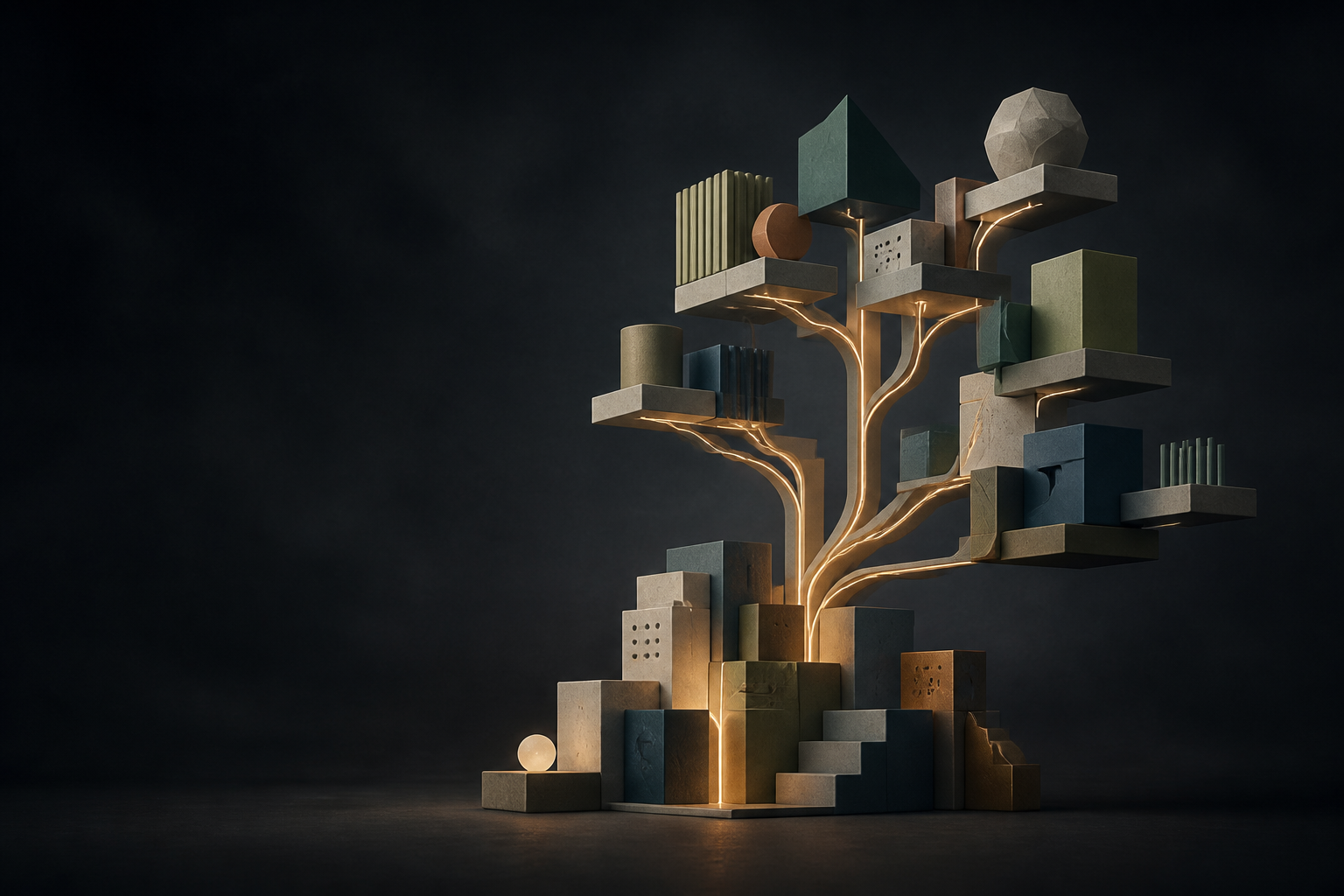
KaKeKiKoKu reflects a principle that has been present from the beginning: complex things become clearer and stronger when their parts have structure, identity, and room to connect. The five syllables form one name, but they also make the idea visible: distinct blocks that belong to a whole.
Wuniq is the first expression of that principle. It is not being discarded. It is becoming the first product in a broader family of software, with the same underlying respect for meaningful parts, coherent systems, and the way those parts work together.
That is also why the product now has a name of its own: KaKeKiKoKu Studio. “Studio” gives the product more room to grow from a Knowledge Engine into a broader workspace for building, connecting, and working with knowledge and AI. Knowledge Engine remains the technical description of what sits at its core; Studio is the product people use.
What I want to explore next
I do not have a fixed sequence or a calendar to publish here. I do have several directions that I want to explore:
- A better file format. The
.wuniqformat is the technical layer that carries project knowledge. I want to improve it so knowledge can be represented more clearly and support what the product is becoming. Existing Wuniq files and projects will have a path to migrate as the format evolves. - Visual Studio Code. I am exploring a KaKeKiKoKu Studio plugin that would bring the experience directly into the editor where many developers already work.
- OpenCode. I also want to continue working toward a proper integration with OpenCode and its open, flexible workflow.
- More open foundations. I want to explore how much of what Wuniq does can work without requiring a proprietary format, using open standards and existing project structures wherever possible.
- A more aware editor experience. New capabilities in KaKeKiKoKu Studio could let the AI understand what the user is editing at any given moment, making the connection between the work on screen and the project knowledge much more immediate.
Update (October 11, 2026): The Visual Studio Code plugin is no longer planned. KaKeKiKoKu Studio is built for AI coding agents, and the ones you can use inside VS Code, such as Claude Code and Codex, already connect to it. The current plans are on the roadmap.
A direction, not a timetable
These are directions, not promises of fixed dates. Some will move faster than others. Some may change as I learn more. Some may remain experiments. I would rather share that honestly than turn early ideas into commitments.
What will remain constant is the foundation. Every software product under KaKeKiKoKu will be built around the same idea: meaningful systems made from parts that have structure, identity, and room to work together.
That is why the brand needs room to grow. The name is changing, but the idea underneath it is not being left behind; it is being given more space.
I will use this blog to share new products, experiments, technical changes, and decisions as they become real. For now, you will see Wuniq and KaKeKiKoKu appear side by side while the transition continues.